
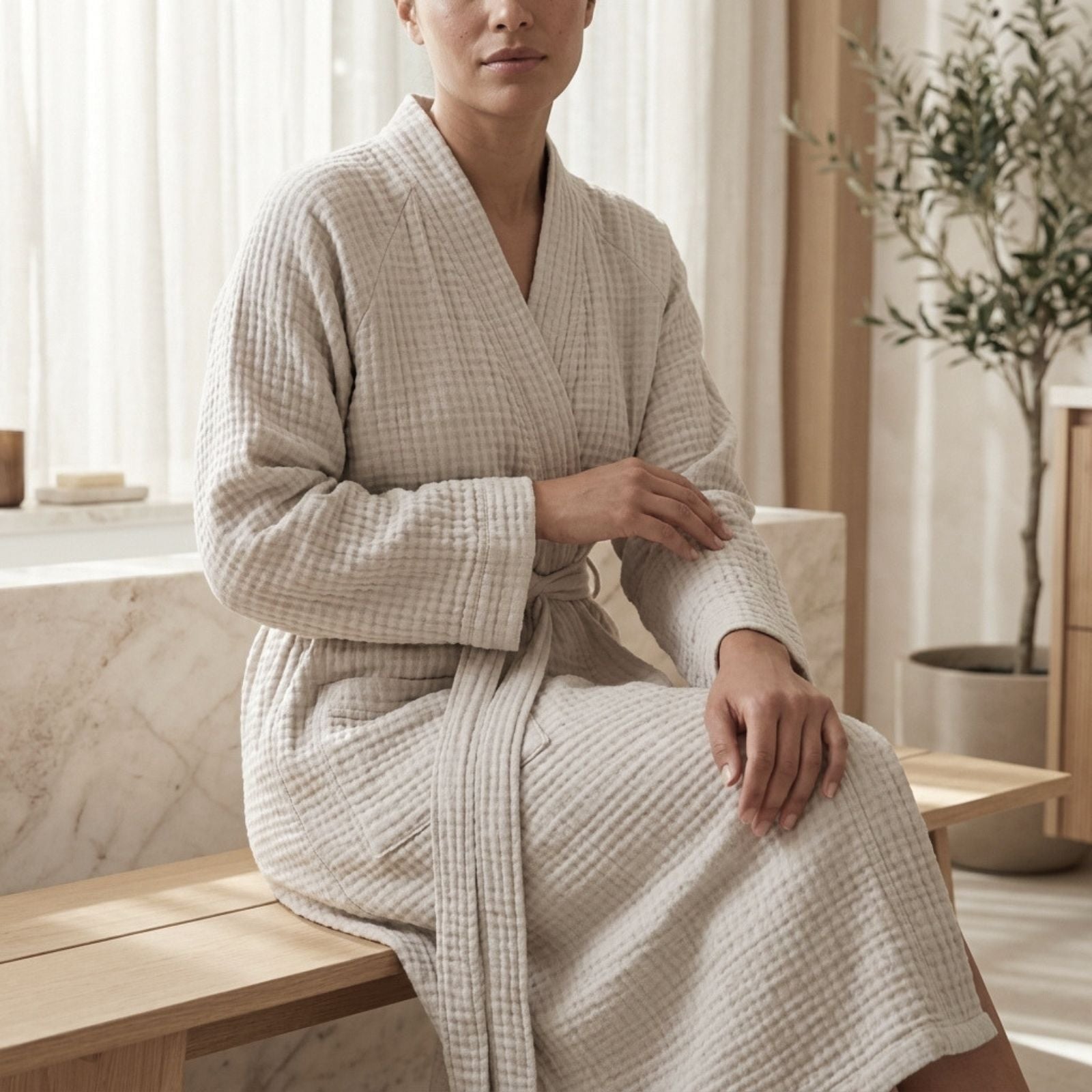
A waffle robe is a lightweight bathrobe woven with a raised, honeycomb shaped pattern instead of the dense loops found in terry cloth. The pattern comes from alternating raised and recessed threads, the same basic technique used to form the squares on an actual waffle, which is where the name comes from. Because the weave uses less yarn per square inch than a plush terry robe, it packs down smaller, dries faster, and sits lighter against the skin.
Most waffle robes sold today are made from long staple Turkish cotton, prized for its softness and durability, though a few blend in polyester for shape retention. A well made robe in this fabric sits mid weight: substantial enough to hold in warmth after a shower, light enough for warm climates and year round bathrooms.
Waffle Robe vs Terry Robe: What's the Difference?
The core difference between the two comes down to how the yarn is constructed. A waffle robe uses a flat, honeycomb weave, while a terry robe uses looped pile yarn that stands up off the surface of the fabric.
That structural gap shapes everything else. Terry cloth traps more water in its loops, so it absorbs faster but takes longer to dry and weighs more once damp. A waffle weave holds less water per square inch but circulates air more easily, which speeds up drying and keeps the robe from feeling heavy.
|
Attribute |
Waffle Robe |
Terry Robe |
|---|---|---|
|
Weave structure |
Flat honeycomb |
Looped pile |
|
Weight |
Lighter |
Heavier |
|
Drying time |
Faster |
Slower |
|
Absorbency |
Moderate |
High |
|
Best suited for |
Warm climates, travel, layering |
Cold climates, spa style warmth |
Most of what is sold as a turkish cotton robe today comes in one of these two weaves, since long staple Turkish cotton takes both structures well and holds its shape wash after wash.
What Makes Waffle Fabric So Special?
Waffle fabric earns its reputation from the small air pockets built into its structure. Each raised square traps a thin layer of air, which adds light insulation without adding bulk, and the recessed channels between the squares let moisture and warm air move through instead of getting sealed in.
That same air pocket structure appears well beyond robes, most commonly in waffle towels, where the honeycomb texture speeds up drying between uses. A parachute waffle bath towel has become a familiar example of this construction outside of robes, and a classic waffle weave towel behaves almost identically to a waffle robe fabric wise, just cut and finished for a different purpose.
The open structure also makes the fabric more breathable than a solid weave of the same weight. Skin stays cooler against a waffle robe than it would against an equally thick terry robe, which is part of why the style has become popular for spring and summer use.
The Benefits of a Waffle Robe for Everyday Comfort
A waffle robe earns its place in daily rotation through a handful of practical advantages that show up every time it gets used.
-
Lightweight and Breathable: The honeycomb structure keeps air moving against the skin, so the robe never feels stifling, even after a hot shower or bath.
-
Fast Drying: Less yarn density means less trapped water, so the robe is ready to wear again well before a comparable terry robe.
-
Space Saving: A thinner, flatter fold takes up noticeably less room on a hook or in a suitcase than a plush robe of the same size.
-
Versatile Year Round: The moderate weight works as a light layer in summer and as an extra layer over pajamas once the weather cools.
Together, these traits explain why the style shows up as often in travel bags as it does in home bathrooms.
Waffle Robe vs Kimono Robe: Which Is Right for You?
A waffle robe and a kimono robe are not competing categories in the same way a waffle robe and a terry robe are, since one describes a fabric weave and the other describes a cut. A waffle robe can be tailored in a kimono silhouette, and many are.
The kimono cut is defined by an open front, a wrap style closure, and no hood, often finished in flowing, multi layer gauze rather than a honeycomb weave. The Joy Kimono Robe is a good example of this style, built from four layers of soft muslin cotton instead of a waffle structure.
Choosing between the two usually comes down to how the robe will be worn. A waffle weave in a classic shawl collar cut suits quick, functional wear around the house. A kimono cut, waffle or otherwise, suits a slower, more styled morning or evening routine, since the open drape works as well over loungewear as it does alone.
How to Choose the Right Waffle Robe
Picking the right waffle robe comes down to a short list of practical details rather than personal taste alone.
-
Fabric Weight: A heavier waffle weave holds warmth better for cooler climates, while a lighter one suits hot, humid bathrooms and travel.
-
Robe Length: Knee length options move more freely and dry faster, while calf length or full length versions offer more coverage and warmth.
-
Closure Style: A tie belt gives an adjustable fit, while snap or zip closures suit anyone who prefers a quicker, hands free option.
-
Sizing: Many waffle robes come one size fits most, though fitted sizing is worth seeking out for a closer, less bulky drape.
Waffle styles sit alongside a wider range of cotton, linen, and silk robes, so comparing weight and cut side by side before buying helps narrow down the right fit.
How to Care for Your Waffle Robe to Make It Last
A waffle robe holds its texture and softness for years when it gets washed the same way every time.
-
Wash in warm water on a gentle cycle, using a mild liquid detergent rather than powder, which can sit in the weave.
-
Skip fabric softener and bleach, since both flatten the raised squares that give the fabric its texture and drying speed.
-
Tumble dry on low heat, or line dry when possible, and shake the robe out before drying to keep the weave from matting.
-
Store on a hook or folded loosely rather than compressed in a drawer, since flattening the honeycomb texture over time reduces its loft.
Following this routine keeps the weave lofted and the drying time short, which is the whole reason most people choose a waffle robe in the first place.
A waffle robe earns its place in a bathroom or closet by combining low bulk with real warmth, a combination few other fabrics manage at once. Deciding between weave, weight, and cut ultimately comes down to climate and daily habits, but the honeycomb structure remains the constant that ties every version of the style together.
Frequently Asked Questions About Waffle Robes
Are waffle robes actually warm?
A waffle robe provides light to moderate warmth rather than heavy insulation. The air pockets in the weave trap some heat close to the body, enough for comfort after a shower or during mild weather, but the style is not meant to replace a thick, plush robe in cold climates.
Can a waffle robe be worn to the beach?
Yes, a waffle robe works well as a beach cover up. Its light weight and fast drying time make it easy to pack, and it dries quickly if it gets splashed or worn over a wet swimsuit, unlike heavier terry styles.
Is a waffle robe the same as a Turkish cotton robe?
Not exactly. Turkish cotton describes the fiber, while waffle describes the weave, so a robe can be both at once. Many waffle robes are made from Turkish cotton, but Turkish cotton also appears in terry and kimono style robes with a different weave entirely.
What is the difference between waffle and terry weave?
Waffle weave is flat with a raised honeycomb pattern, while terry weave uses looped pile yarn that stands up from the surface. Terry holds more water and feels plusher, while waffle stays lighter, dries faster, and takes up less space.
How absorbent is a waffle robe compared to a terry robe?
A waffle robe absorbs less water per square inch than a terry robe because it lacks the dense pile loops that hold moisture. It still wicks moisture effectively for everyday use, just not to the level of a heavier, plush terry style.
Share:
Father's Day Gift Ideas: What to Buy for Every Dad
Bath Sheet vs Bath Towel: What's the Difference?