
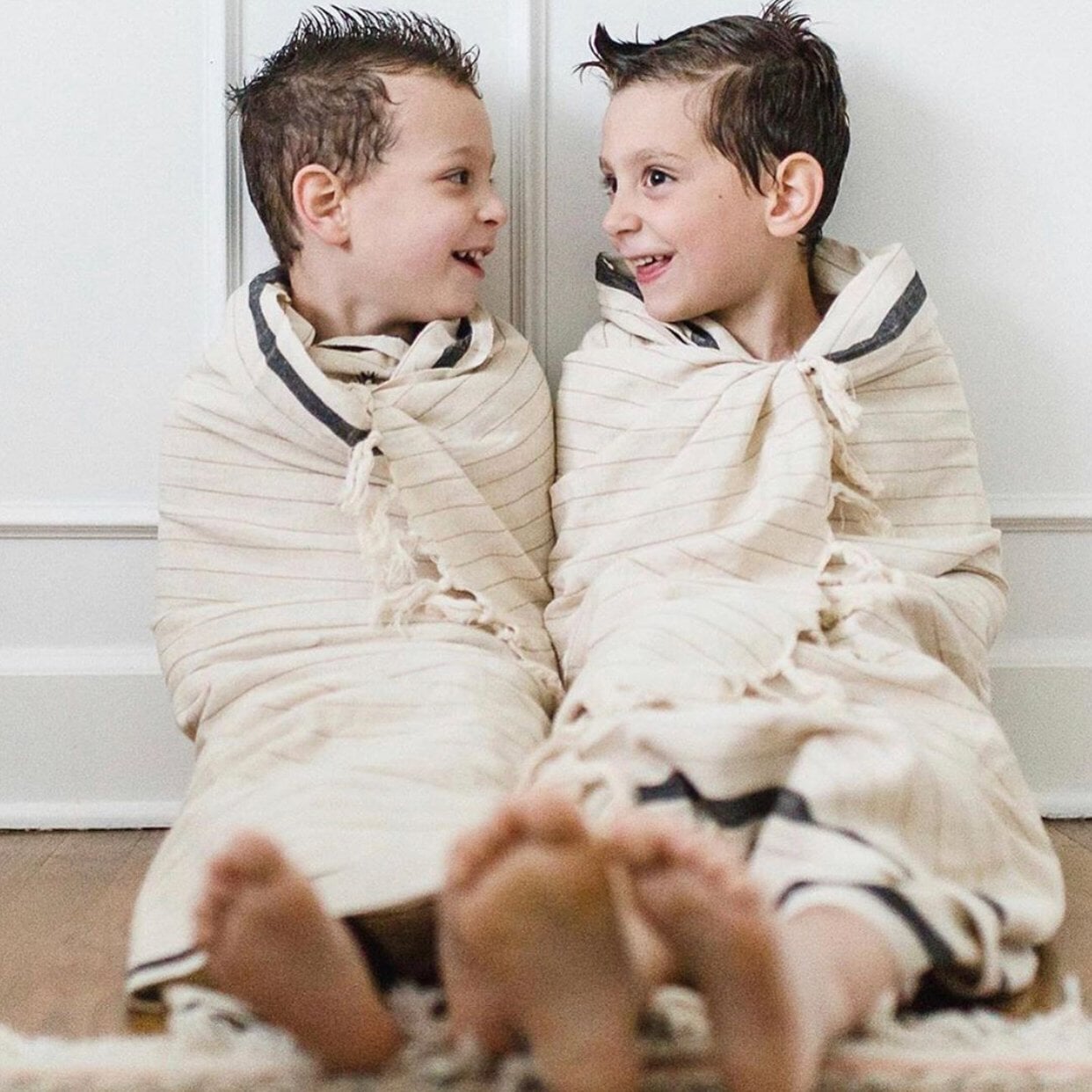
Baby bath towels are smaller, softer, and more absorbent than standard bath towels, and most include a hood to keep a baby's head warm right after bathtime. The right towel also uses a gentler fabric, since a newborn's skin is thinner and more reactive than an adult's. Size, material, and wash care all affect how well a towel performs and how long it lasts.
Why Baby Bath Towels Are Different from Regular Towels
Baby bath towels are cut smaller and woven from lighter, more breathable fabric than adult towels, so a caregiver can wrap and hold a baby securely without the towel becoming heavy or bulky. A standard bath towel measures around 27 x 52 inches, while most baby bath towels stay closer to 30 x 30 inches, a size built for wrapping rather than drying a full-length body. The lighter weave also dries faster, which matters for households doing several baths a week. Softness is another factor: baby skin has a thinner outer layer than adult skin, so scratchy or stiff fabric can cause redness within minutes of contact.
What Types of Baby Bath Towels Are There?
Baby bath towels come in a few main styles, and the differences mostly come down to shape and how the hood is attached.
-
Hooded Wrap Towels: A square towel with a triangular hood sewn onto one corner, the most common style for daily bathtime use.
-
Cape Towels: Similar to a wrap towel but cut with a slight curve so it sits more like a cape once the hood is on.
-
Poncho Towels: A towel with a head opening in the center rather than a corner hood, pulled on over the head like a small garment.
-
Towel Sets: A hooded towel paired with matching washcloths, often the most practical bath towel set option for parents who want extra absorbency on hand.
Most parents start with two or three baby towels in a hooded wrap style, then add a poncho or towel set as bathtime routines change.
Hooded vs Non-Hooded Baby Towels: Which Is Better?
Hooded baby towels are the better default for newborns and infants, since a wet head loses heat fast and the built-in hood keeps a baby warmer while being carried from the tub. Non-hooded, flat towels still work well as a secondary towel for wiping down a changing table or catching drips, and they're easier to launder because there's no extra fabric folded into a corner. Once a toddler can sit up and dry off independently, a plain towel or baby towels with a hood in a larger size often replace the newborn wrap style, since the hood no longer serves its original purpose of covering a baby held against a caregiver's shoulder.
Baby Bath Towel Materials: Cotton, Bamboo, and Turkish Cotton Compared
Cotton, bamboo, and Turkish cotton all work for baby towels, but they differ in absorbency, drying speed, and how they feel against sensitive skin.
|
Material |
Absorbency |
Drying Time |
Feel on Skin |
|---|---|---|---|
|
Standard Cotton |
High |
Slower, terry loops hold water |
Soft, though loops can feel textured |
|
Bamboo-Cotton Blend |
Moderate to high |
Faster than pure cotton |
Very smooth, naturally hypoallergenic |
|
Turkish Cotton |
High |
Fast, lighter weave than terry |
Soft, lightweight, and breathable |
Turkish cotton towels use long-staple fibers woven into a flatter, lighter structure than standard terry cloth, which is why they dry quickly without losing softness. For a family that already owns Turkish bath towels for the rest of the household, matching the baby's towel to the same fiber keeps the wash routine and fabric feel consistent as the child grows into a full-size towel.
How Many Baby Bath Towels Do You Really Need?
Most households do well with three to four baby bath towels in rotation, enough to allow for one in use, one drying, and a backup for spit-up or diaper leaks between wash days. Bathtime happens most days for a newborn, so a single towel would need to be washed daily, which shortens its lifespan and adds extra laundry. Families who bathe a baby every other day can usually manage with two towels. As a baby grows past the toddler stage and starts drying off with more independence, the smaller wrap towel is typically retired in favor of a standard or Turkish bath towel sized for a bigger body.
How to Choose the Best Baby Bath Towel for Sensitive Skin
The best baby bath towel for sensitive skin is unbleached, free of synthetic dyes, and made from a single natural fiber rather than a blend treated with fabric softener during manufacturing.
-
Fiber Content: Choose 100% cotton or bamboo rather than polyester blends, which trap heat and don't absorb moisture as well.
-
Dye and Bleach: Look for undyed or naturally dyed towels, since bleach and synthetic dyes are common irritants for eczema-prone skin.
-
Weave Density: A tighter weave holds up to frequent washing without the fibers roughening over time.
-
Certifications: OEKO-TEX or similar certifications confirm the fabric was tested for harmful substances before it reached the shelf.
How to Wash and Care for Baby Towels Safely
Baby towels wash safely in warm water on a gentle cycle using a mild, fragrance-free detergent, without any fabric softener or bleach.
-
Wash new towels once before first use to remove manufacturing residue and soften the fibers.
-
Use a small amount of mild detergent, since heavy suds are harder to rinse fully from thick or looped fabric.
-
Skip fabric softener, since it coats the fibers with a film that reduces absorbency over time.
-
Tumble dry on low heat, or line dry, then shake the towel out to loosen the fibers before folding.
-
Wash separately from items with zippers or buttons that could snag the loops or hood seam.
The best baby towels earn their place in the rotation through consistent softness, quick drying, and a hood that actually keeps a baby warm, not through marketing claims about size or fabric alone. Paying attention to fiber content and wash habits keeps a towel performing the same way on day 200 as it did on day one.
Baby Bath Towels: Frequently Asked Questions
What size should a baby bath towel be?
Most baby bath towels measure around 30 x 30 inches, big enough to wrap a baby from shoulders to knees while still folding down small for travel. Some brands size up to 32 x 32 inches for older infants and toddlers. A towel much larger than that becomes hard to manage during a wet, wiggly bathtime.
Are hooded towels necessary for babies?
They aren't strictly necessary, but they're practical. A baby's head loses heat faster than the rest of the body, so a hood helps prevent a chill right after the bath. A hooded towel also frees both of a caregiver's hands during the transfer from tub to changing table, which a flat towel doesn't offer.
Is Turkish cotton safe for baby skin?
Yes. Turkish cotton is a natural, long-staple fiber typically woven into a lighter, less textured surface than standard terry cloth, which makes it gentle against sensitive skin. As with any towel, checking for OEKO-TEX or similar certification confirms the fabric hasn't been treated with harsh dyes or chemical finishes.
When should you switch from baby towels to regular towels?
Most families switch somewhere between eighteen months and three years old, once a toddler can sit and dry off with less assistance and the small wrap towel starts to feel undersized. There's no fixed age; it depends more on the child's height than on a strict timeline.
Can you use fabric softener on baby towels?
It's best avoided. Fabric softener leaves a light coating on the fibers that reduces how much water a towel can absorb over time, and the added fragrance can irritate sensitive newborn skin. A mild, unscented detergent keeps the towel both soft and fully absorbent through repeated washes.
Share:
What Are Pool Towels?
What Makes the Best Beach Blanket?